SaaS Finance

Unlocking the Power of SaaS with Customised Financing Solutions

Empowering Innovation With HC Finance Group

At HC Finance Group, we understand that SaaS businesses have unique financial needs that require tailored financing solutions. Our SaaS financing service is designed to meet these needs and provide flexible funding options that align with SaaS companies’ business models and growth trajectories.


We recognise the importance of supporting innovation and are committed to helping SaaS businesses thrive. Our team of experienced financial experts has a deep understanding of the SaaS ecosystem and can provide expert guidance to help companies to make informed financial decisions.


Our SaaS financing solutions are customised to meet the unique needs of each business we work with. Whether a company is seeking equity financing, debt financing, or a combination of both, we can provide the capital they need to achieve its growth goals.

Working With HC Finance Group Is Simple

Apply Online

Use the buttons around the website to start our quick and easy online application process.

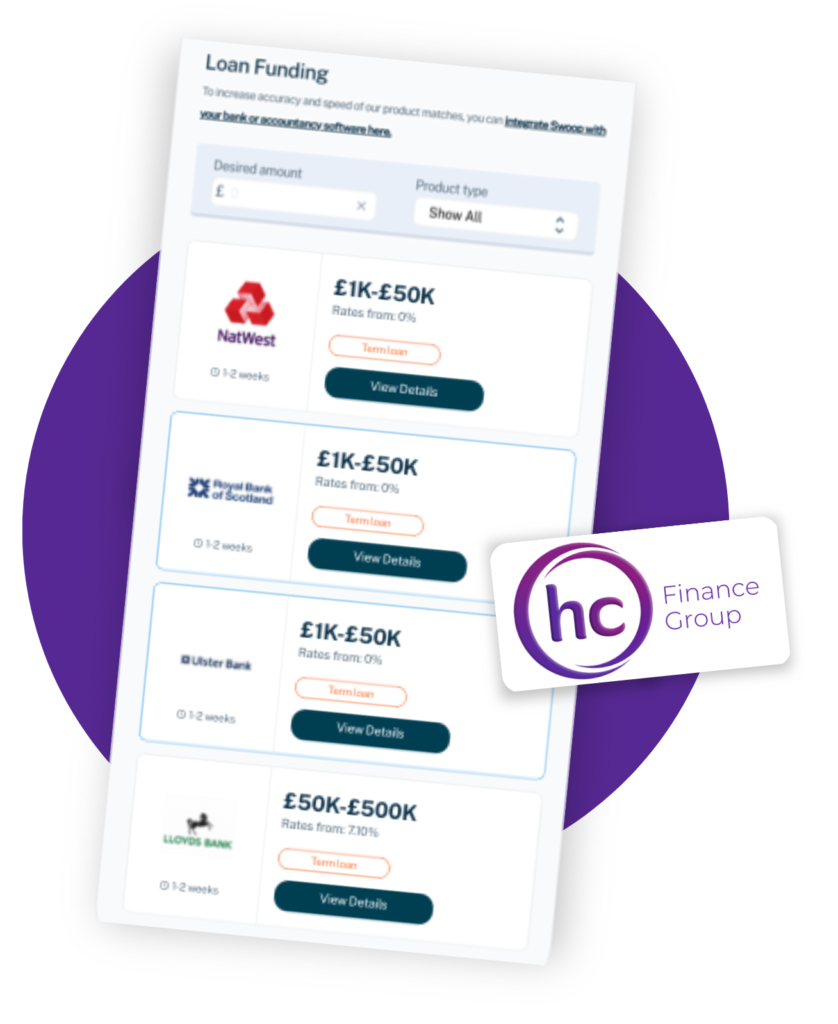
Get Funding Matches

We will pair you with the best funding opportunities that fits your needs.

Get Your Money

Our streamlined process gets you funded fast.
Get started on your journey to success

Start Your SaaS Finance Application Now

What Is SaaS Financing?

SaaS financing is a specialised form of funding designed to address the distinct financial requirements of SaaS businesses. This type of financing takes into account the unique characteristics of SaaS companies, such as their recurring revenue streams, high growth potential, and scalability. SaaS financing can include equity investments, revenue-based financing, or debt financing and offers SaaS businesses the necessary capital to fuel growth, support innovation, and navigate financial challenges.

What Types Of Businesses Can Apply?

SaaS financing is suitable for businesses that operate within the Software as a Service model, where software applications are hosted centrally and accessed by users through the internet on a subscription basis. These businesses typically have a recurring revenue model, with customers paying for the software usage over time rather than a one-time purchase. SaaS companies across various industries, including healthcare, education, marketing, and human resources, can apply for SaaS financing to support their growth and development.

Get Started Today

No matter if you’re just starting out or a well-established company, there’s a financing plan to help you take the next big step. Find out more about the funding options for your SaaS business by registering with HC Finance Group.

What Can I Use The Funds For?

SaaS financing can be used for various purposes depending on the specific needs and objectives of the business. Some common uses of funds include investing in research and development to enhance existing products or create new offerings, scaling the business to reach new markets, customers, or regions, and boosting marketing efforts to increase brand awareness and drive customer acquisition. Additionally, funds can be used to enhance customer experience and retention through improved support services or to invest in technology infrastructure to support growth and maintain a competitive edge.


By accessing tailored financing solutions, SaaS companies can invest in their growth, maintain their competitive edge, and navigate the unique financial challenges associated with the SaaS business model. Whether through equity investments, revenue-based financing, or debt financing, SaaS finance provides the necessary capital to help SaaS businesses scale and succeed in a rapidly evolving market.

Advantages

  • Scalability: SaaS financing can help a company scale quickly by providing the necessary funds to develop, market, and sell its software to more customers. This, in turn, can help the company generate more revenue and grow faster.

  • Reduced risk: SaaS financing can help reduce the risk of failure for a company by providing it with the resources it needs to invest in research and development, marketing, and hiring. This can help the company build a solid foundation for future success.

  • Flexibility: SaaS financing can be structured in different ways, such as equity financing or debt financing. This provides companies with flexibility in terms of how they want to raise capital and manage their finances.

  • Increased valuation: SaaS financing can help increase the valuation of a company, making it more attractive to potential investors and buyers.

  • Competitive advantage: SaaS financing can give a company a competitive advantage by enabling it to invest in technology and talent that can help it create better software and services than its competitors.

  • Faster time-to-market: SaaS financing can help a company bring its products to market faster by providing the necessary resources to develop, test, and launch its software.

Disadvantages

  • Downtime: Any problems with the data centre can directly affect the SaaS company and its users. This can cause issues that spread quickly and lead to disruptions in service.

  • Pricing: The costs of running a SaaS business are typically passed on to users through subscription fees. Users may find it difficult to opt-out of long-term contracts, even if fees increase rapidly.

  • Inflexibility: Users may not be able to reduce their membership until a lengthy notice period has passed, limiting their flexibility.

  • Security: Third-party data centres are responsible for storing user data. The effectiveness of their security measures can vary, putting both the SaaS company and its users at risk of data breaches and loss.

Find Out More About SaaS Finance

SaaS stands for Software as a Service. It is a software licensing and delivery model in which software applications are centrally hosted and accessed by users through the internet, typically on a subscription basis. This model eliminates the need for users to install and maintain software on their own devices, offering a more convenient and cost-effective solution.

SaaS companies are different from traditional software businesses due to their unique business model and operational characteristics. Some key differences include how they generate revenue through subscription fees, providing a predictable and stable income stream. Additionally, SaaS applications can be easily scaled to accommodate growth as they are centrally hosted and maintained. Due to the subscription-based model, this type of business typically has lower upfront costs and a more predictable cost structure. SaaS companies also focus heavily on retaining customers through continuous product improvements and customer support since customer lifetime value is a critical metric in this business model.

SaaS offers versatile solutions to address a wide range of business requirements. Among the most common applications are:

  1. Accounting and invoicing: Streamlining financial processes and transactions.
  2. Human resources: Facilitating workforce management and recruitment efforts.
  3. Customer relationship management (CRM): Managing customer data and sales information.
  4. Project management: Organising and tracking projects and tasks.
  5. Marketing and networking: Enhancing marketing strategies and building professional connections.
  6. Web hosting and e-commerce: Providing reliable online platforms for businesses to operate and sell products or services.
  7. Data management: Ensuring secure and efficient storage, organisation, and access to business data.

SaaS funding typically occurs in various stages, reflecting the growth and development of the business. These stages may include:

  1. Pre-seed or seed stage: This initial funding stage is intended to support the development of the product concept and market validation. Investment at this stage often comes from founders, friends, family, or angel investors.
  2. Series A: This stage focuses on product development and market entry, with investment typically coming from venture capital firms and other institutional investors.
  3. Series B: At this stage, the focus shifts to scaling the business and expanding its market presence. Funding often comes from venture capital firms and other institutional investors, and the investment is used to grow the team, improve infrastructure, and boost marketing efforts.
  4. Series C and beyond: These funding stages are focused on continued growth, market expansion, and potentially entering new markets or launching new products. Funding at this stage typically comes from a mix of venture capital firms, private equity firms, and even strategic corporate investors.

SaaS revenue-based financing (RBF) is a unique financing model in which a business receives an upfront investment in exchange for a percentage of its future recurring revenue. This type of financing is tailored to the specific cash flow and growth patterns of SaaS companies, providing a more flexible repayment structure than traditional debt financing. With RBF, the repayment amount adjusts based on the company’s actual revenue, ensuring that the business can effectively manage its cash flow during high-growth and slower periods.

SaaS debt financing involves a business borrowing money from a lender with the agreement to repay the principal amount plus interest over a specified period. This type of financing can be an attractive option for SaaS businesses, as it allows them to access capital without diluting ownership or control. SaaS debt financing is often structured with repayment terms that align with the company’s recurring revenue model, ensuring that the debt servicing remains manageable as the business grows.

Bessemer Venture Partners, a leading venture capital firm, has identified five critical metrics for evaluating the financial performance of SaaS businesses, known as the 5 Cs of SaaS finance. These metrics include:


  1. Committed Monthly Recurring Revenue (CMRR): A measure of the total value of recurring revenue from subscriptions, factoring in new contracts, contract expansions, and churn.
  2. Cash flow: The net cash generated or used by a business, highlighting the company’s ability to manage its financial resources effectively.
  3. Churn: The rate at which customers cancel or downgrade their subscriptions, indicating the effectiveness of a company’s customer retention efforts.
  4. Customer acquisition cost (CAC): The total cost of acquiring a new customer, including marketing, sales, and support expenses.
  5. Customer lifetime value (CLTV): The total revenue a business expects to receive from a customer over the duration of their relationship, helping to inform decisions about customer acquisition and retention strategies.