VAT Loans

Stay Compliant, Stay Stable: The Smart Way to Manage VAT Obligations

Navigate VAT Obligations With Ease

The VAT Loan service is specifically designed to assist businesses in navigating the intricacies of VAT obligations while maintaining healthy cash flow and financial stability. The service provides businesses with access to the necessary funds to pay their VAT obligations on time, thus avoiding penalties and fines. This, in turn, ensures that businesses can maintain their financial stability and continue to operate without disruptions.


As the digital revolution continues to reshape the financial landscape, HC Finance Group understands the importance of providing businesses with cutting-edge financial tools and services that address their needs in an ever-changing economic environment. To this end, the VAT Loan service is fully digital, providing businesses with a fast, secure, and convenient way to access the funds they need to meet their VAT obligations.


HC Finance Group’s VAT Loan service offers businesses a comprehensive solution for managing one of the most crucial aspects of business finance – VAT obligations. With this service, businesses can ensure that they remain compliant with VAT regulations while maintaining their financial stability and avoiding penalties and fines. The service is fully digital, providing businesses with a fast, secure, and convenient way to access the funds they need to meet their VAT obligations.

Working With HC Finance Group Is Simple

Apply Online

Use the buttons around the website to start our quick and easy online application process.

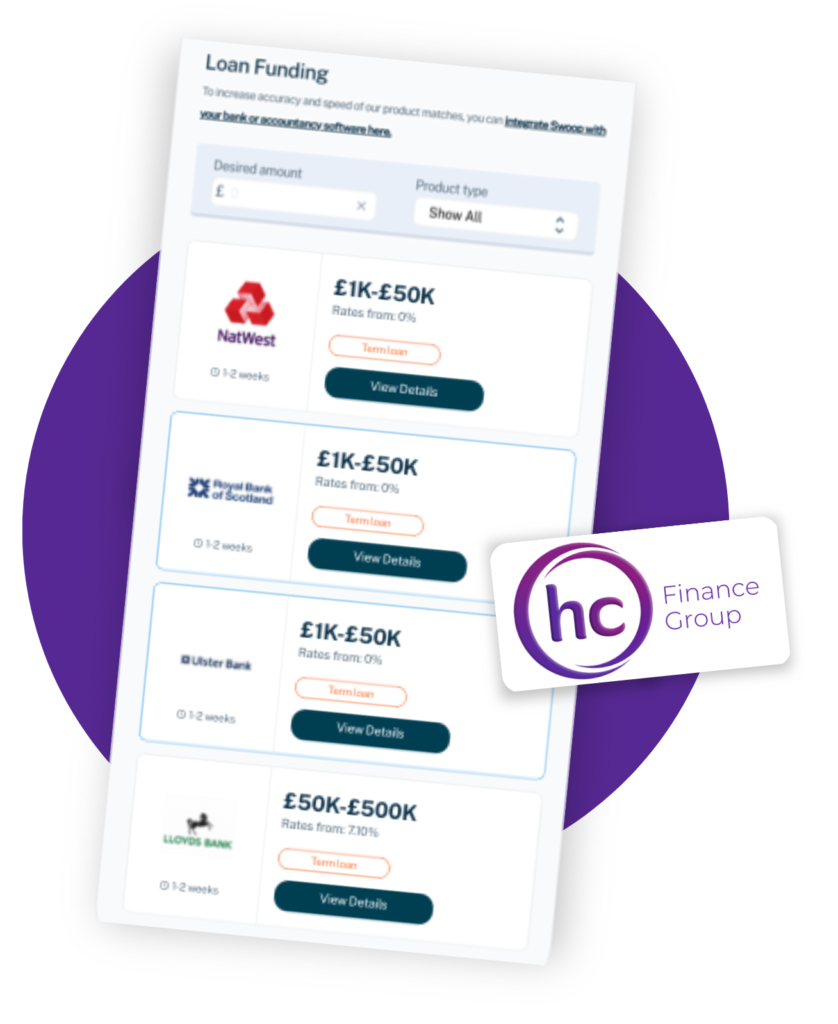
Get Funding Matches

We will pair you with the best funding opportunities that fits your needs.

Get Your Money

Our streamlined process gets you funded fast.
Get started on your journey to success

Start Your Recovery Loan Scheme Application Now

What Is VAT?

VAT, or Value Added Tax, is a consumption tax levied on selling goods and services within the United Kingdom. It is an indirect tax that is charged at different rates depending on the type of goods or services being provided. VAT operates on a multi-stage collection system, with tax being collected at every stage of the supply chain. This means that businesses collect VAT from their customers, and then subsequently remit the collected amount to HM Revenue & Customs (HMRC). By doing so, the tax burden is ultimately borne by the final consumer of the goods or services.


The standard rate of VAT in the UK is 20%, with reduced rates of 5% and 0% applying to specific goods and services. Additionally, some goods and services are exempt from VAT or are subject to special VAT schemes.

What Is A VAT Loan?

A VAT loan is a short-term financing solution that allows businesses to borrow funds to cover their VAT bill. These loans are designed to help businesses maintain healthy cash flow and meet their VAT obligations without disrupting their day-to-day operations. With a VAT loan, businesses can avoid late payment penalties and safeguard their financial stability.

How Do VAT Loans Work?

VAT loans are typically unsecured, meaning that businesses do not need to provide collateral to secure the loan. The application process is generally straightforward and fast, with funds often being disbursed within a few days of approval. To apply for a VAT loan, businesses must provide relevant documentation, such as VAT returns, bank statements, and financial statements, to demonstrate their ability to repay the loan.


Upon approval, the borrowed funds are usually paid directly to HMRC to cover the VAT bill. The business then repays the loan, along with interest, in instalments over a predefined period, typically ranging from three to twelve months.

Get Started Today

Don’t get caught with hefty penalties and surcharges by paying your VAT bill late. Contact HC Finance Group to secure the VAT loan you need. Pay your tax on time, ease your cash flow, and use your extra money to grow your business.

How Much Can I Borrow?

The amount a business can borrow through a VAT loan depends on several factors, including the size of its VAT bill, its financial stability, and its creditworthiness. VAT loans can generally cover the entire VAT bill or a portion of it, depending on the lender’s assessment and the business’s requirements.

Is My Business Eligible For A VAT Loan?

Eligibility for a VAT loan depends on several factors, including the size and nature of the business, its financial stability, and its creditworthiness. Lenders typically assess a business’s ability to repay the loan by reviewing financial statements, credit history, and cash flow projections. Businesses that consistently meet their VAT obligations and have sound financials are more likely to qualify for a VAT loan.

Advantages

There are several benefits to using a VAT loan to pay your VAT bill, including:


  1. Improved cash flow management: VAT loans help businesses maintain healthy cash flow by providing funds to cover their VAT obligations without depleting working capital.

  2. Avoiding late payment penalties: Timely payment of VAT bills with the help of a VAT loan can prevent penalties and interest charges from HMRC.

  3. Financial flexibility: Businesses can use VAT loans to manage their VAT payments while focusing on other aspects of their operations, such as investing in growth or addressing unexpected expenses.

  4. Easier budgeting: Repaying VAT loans in instalments allows businesses to spread their VAT costs over time, making managing and budgeting for their financial obligations easier.

Disadvantages

Because they are short-term, VAT loans can be more expensive than other forms of business borrowing. Depending on how quickly they need the funds, business owners should consider the cost of this type of finance compared to other lending options.

Find Out More About VAT Loans

A business must register for VAT if its taxable turnover exceeds the VAT registration threshold, which is £85,000 (as of 2021). Taxable turnover refers to the total value of taxable goods and services provided by the business, excluding VAT. Once registered, the business must charge VAT on its taxable goods and services, maintain accurate VAT records, and submit VAT returns to HMRC, usually quarterly.

It is important to note that businesses can voluntarily register for VAT even if their taxable turnover is below the threshold. This can be beneficial for businesses that want to reclaim VAT on purchases or create a more professional image.

To calculate your VAT bill, you must first determine the total amount of VAT collected from customers during the VAT accounting period. This includes VAT charged at the standard, reduced, and zero rates. Next, subtract the VAT you have paid on eligible business expenses and purchases, known as input VAT. The remaining amount, called the output VAT, is what you are required to pay to HMRC.

Businesses can use different VAT accounting schemes to simplify the process of calculating their VAT bills, such as the Flat Rate Scheme or the Cash Accounting Scheme. These schemes are designed to make it easier for businesses to manage their VAT obligations and may result in reduced administrative burdens.

Paying your VAT bill late can have serious consequences for your business. HMRC may charge penalties and interest on the overdue amount, which can quickly accumulate and create additional financial strain. Furthermore, persistent late payments may lead to a damaged credit rating or intervention by HMRC, such as an inspection or assessment of your business.

To avoid late payment penalties, it is crucial for businesses to maintain accurate VAT records, stay informed about their VAT liabilities, and ensure that they have sufficient funds to cover their VAT bill when it becomes due.

The frequency at which a business can apply for and receive a VAT loan depends on its financial situation and the lender’s policies. Some businesses may opt for a VAT loan only when faced with cash flow difficulties, while others may choose to utilise VAT loans regularly to manage their VAT obligations and maintain financial flexibility.

Interest rates on VAT loans vary depending on the lender, the loan amount, the repayment term, and the credit profile of the business. Businesses with strong financials and good credit history may secure lower interest rates than those with weaker financial performance or poor credit ratings.

A VAT bridging loan is a type of short-term financing designed to provide businesses with immediate funds to cover their VAT bill. At the same time, they await the receipt of funds from another source, such as a customer payment or a longer-term loan. These loans function as a financial “bridge” that helps businesses meet their VAT obligations without disrupting their operations or straining their cash flow.

VAT loans are specifically designed to cover VAT bills and are typically not intended to be used for other corporation tax liabilities. However, alternative financing options are available to businesses that need assistance in managing other tax obligations, such as Corporation Tax loans or working capital loans. These loans can provide businesses with the necessary funds to meet their tax liabilities while maintaining financial stability and cash flow.