Secured Business Loans

Get the Funding You Need with Confidence - Trust HC Finance Group's Secured Business Loans.

Secure Your Business's Future with Secured Business Loans

If your UK business needs capital to expand and you have assets that can be used as collateral, a secured business loan might be the perfect solution. By securing the loan against your assets, the lender reduces the risk of losing money if you’re unable to repay the loan, making it more likely that you’ll be approved for the loan. Additionally, secured loans typically offer lower interest rates, longer terms, and higher loan amounts than unsecured loans.


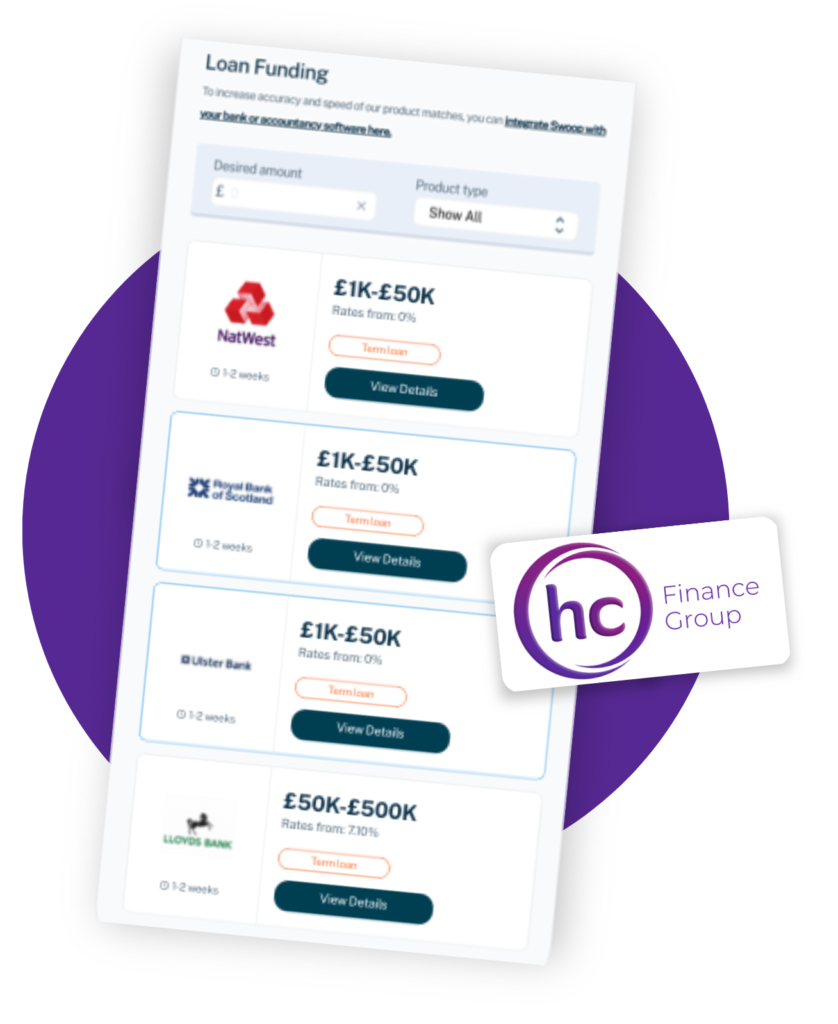
In the UK, there is a diverse range of lenders in both the traditional banking sector and the alternative finance market, each offering various lending products to suit your business needs. To find out more about your options get started below.

Working With HC Finance Group Is Simple

Apply Online

Use the buttons around the website to start our quick and easy online application process.

Get Funding Matches

We will pair you with the best funding opportunities that fits your needs.

Get Your Money

Our streamlined process gets you funded fast.
Get started on your journey to success

Start Your Secured Business Loan Application Now

What Is A Secured Business Loan?

A secured business loan is a type of loan that is backed by collateral, such as property, equipment, inventory, or accounts receivable. The collateral acts as a security measure for the lender, reducing their risk if the borrower defaults on the loan. This type of loan is often used by businesses that need a larger amount of funding or have a less-than-stellar credit history.


Secured loans typically come with lower interest rates than unsecured loans because the collateral provides the lender with a way to recover their losses if the borrower defaults. However, the borrower risks losing the collateral if they cannot repay the loan. In addition, secured loans typically have a longer application process than unsecured loans because the lender needs to evaluate the collateral and assess its value.

Get Started Today

If you want to discuss secured business loans or are unsure about the best type of finance for your business situation, register with HC Finance Group to speak to a financial expert about your options. 

How Much Can I Borrow?

The amount that you can borrow with a secured business loan will depend on the value of the collateral you are providing, as well as other factors such as your credit history and business financials. Typically, lenders will lend up to 80-90% of the collateral value. To find out how much you can borrow, Get Started today.

What Do I Need To Qualify?

To qualify for a secured business loan, you will typically need to provide collateral valued at or above the amount of the loan you seek. In addition, you will need to demonstrate that you have a solid credit history and financial standing and that you have a well-established business with a proven track record of success.

Other factors that lenders may consider when evaluating your application include your ability to repay the loan, your business plan and goals, and any other outstanding debts or financial obligations. To start the application process and see how HC Finance can help Get Started today.

Advantages

  • Easier to qualify for: Secured loans are often easier to qualify for than unsecured ones because the collateral provides the lender with a safety net if the borrower defaults.
  • Lower interest rates: Secured loans typically come with lower interest rates than unsecured loans because the collateral reduces the lender's risk.
  • Higher loan amounts: Because the collateral reduces the lender's risk, they may be willing to lend a larger amount of money than they would with an unsecured loan.

Disadvantages

  • Risk of losing collateral: The biggest downside of a secured loan is the risk of losing the collateral if the borrower cannot repay the loan.
  • Longer application process: Because the lender needs to evaluate the collateral, the application process can take longer than with an unsecured loan.
  • Additional fees: Some lenders may charge additional fees, such as appraisal or legal fees, to evaluate the collateral.

Find Out More About Secured Business Loans

The main difference between secured and unsecured business loans is that secured loans require collateral, while unsecured loans do not. This means that secured loans are generally less risky for lenders, allowing them to offer lower interest rates and loan amounts.


On the other hand, unsecured loans do not require collateral but are typically harder to qualify for and have higher interest rates. They are often used by businesses with less valuable assets to use as collateral or looking for a smaller amount of funding.

In general, secured loans are easier to get than unsecured loans because they are less risky for lenders. By providing collateral, borrowers are essentially giving lenders a safety net in case they are unable to repay the loan. This reduces the lender’s risk and makes them more willing to lend to borrowers who may not qualify for unsecured loans.


However, it’s important to note that lenders will still evaluate a borrower’s creditworthiness and financial standing before approving a secured loan. Borrowers must still demonstrate that they are able to repay the loan on time and in full.

Yes, your business assets are at risk if you default on a secured business loan. If you are unable to repay the loan, the lender has the right to seize the collateral and sell it to recover their losses. This means that you could lose any assets that you put up as collateral, including property, equipment, inventory, or accounts receivable.

Small business loans can be either secured or unsecured, depending on the lender and the borrower’s qualifications. Some lenders may require collateral for small business loans, while others may be willing to offer unsecured loans to well-established businesses with good credit.

Almost anything of value can be used as security for a business loan, including property, equipment, inventory, accounts receivable, or investments. The collateral must be valued at or above the amount of the loan being sought.

Yes, the property is a common type of collateral for a secured business loan. However, it’s important to note that the value of the property must be sufficient to cover the loan amount and that the lender may require an appraisal to determine the property’s value.

A legal charge is a type of security interest that gives the lender a right to enforce the charge against the borrower’s property. This means that the lender has the right to seize the collateral and sell it to recover their losses if the borrower defaults on the loan.


An equitable charge, on the other hand, gives the lender an interest in the property but does not give them the right to seize the property immediately. Instead, the lender must apply to the court to enforce the charge. Equitable charges are less common than legal charges and are typically used when the borrower does not have clear legal ownership of the collateral.

A cash-secured business loan is a type of loan where the borrower puts up a cash deposit as collateral. The deposit is usually held in a special account and used to pay off the loan if the borrower defaults. This type of loan is often used by businesses that are just starting out or that have poor credit, as it reduces the lender’s risk and makes them more willing to lend.

Yes, you can get a business loan without security, but it may be harder to qualify for and have higher interest rates. Unsecured loans do not require collateral, but they do require a strong credit history and financial standing.

Getting a secured business loan with bad credit may be more difficult, but it’s not impossible. Borrowers with bad credit may need to provide additional collateral or a personal guarantee or work with lenders specialising in loans for businesses with poor credit.

Secured loans can impact your credit score, both positively and negatively. Making timely payments and paying off the loan on time can help improve your credit score, as it demonstrates responsible borrowing behaviour. However, if you default on the loan and the lender seizes your collateral, this can hurt your credit score and make it harder to qualify for loans in the future.

Secured loans are typically less expensive than unsecured loans because they are less risky for lenders. By providing collateral, borrowers are essentially giving lenders a safety net in case they are unable to repay the loan. This reduces the lender’s risk and allows them to offer lower interest rates.


On the other hand, unsecured loans do not have collateral to fall back on if the borrower defaults. This makes them riskier for lenders, who compensate by charging higher interest rates.

Whether or not you will need a personal guarantee depends on the lender and your qualifications. Some lenders may require a personal guarantee, which is a legally binding promise to repay the loan if the business cannot. Personal guarantees are typically required when the borrower’s collateral is insufficient to cover the loan amount.

Suppose you are unable or unwilling to provide collateral for a secured loan. In that case, there are several alternatives you can consider, including:

  • Unsecured loans: These loans do not require collateral but are typically harder to qualify for and have higher interest rates.
  • Lines of credit: A line of credit is a revolving credit account that allows you to borrow and repay funds as needed. Lines of credit can be secured or unsecured.
  • Business credit cards: Business credit cards allow you to borrow funds for business expenses and typically offer rewards and benefits.
  • Crowdfunding: Crowdfunding platforms allow businesses to raise funds from many individual investors.

If you want to access your options, contact HC Finance today or  Get Started Here  to talk to one of our trusted advisors.

To get a secured business loan, you will need to identify a lender that offers this type of loan and meet their qualifications. This typically involves providing collateral, demonstrating your ability to repay the loan, and undergoing a credit check and evaluation of the collateral. The application process can be lengthy and may require providing additional documentation, such as financial statements and tax returns. Once approved, you must make regular payments to repay the loan according to the agreed-upon terms. At HC Finance Group, we can help you find the perfect lender and help you with the paperwork. Get started here.